
AFBC Calls for Reconsideration of PST on Architectural Services
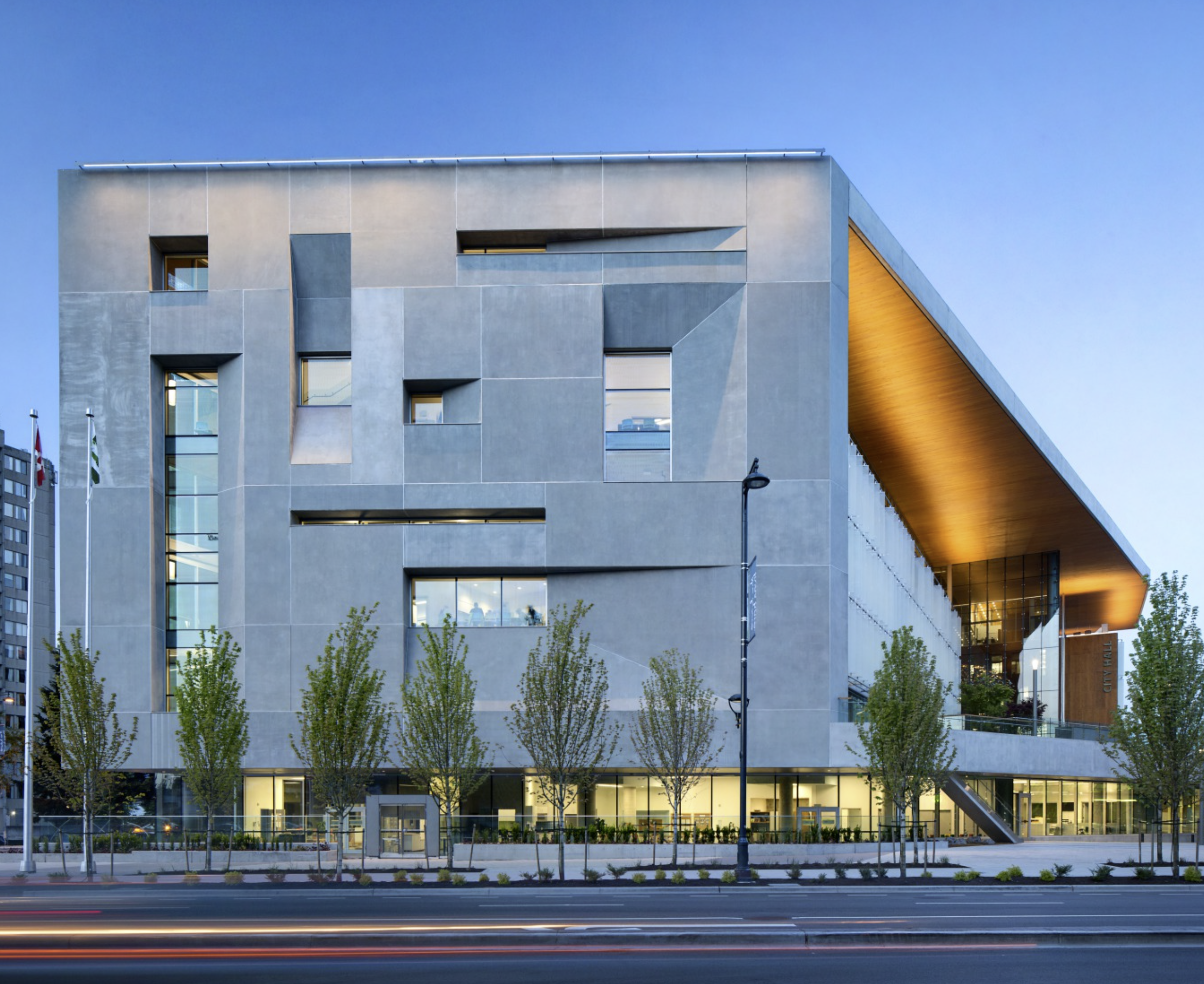
Surrey Civic Centre by Moriyama Teshima & Kasian, photo by Ema Peter.
The Architectural Foundation of British Columbia has written to the Province of British Columbia to express our concerns regarding the proposed application of Provincial Sales Tax (PST) to architectural and other professional design services.
At a time when British Columbia is working to increase housing supply, improve affordability, and accelerate development, AFBC is concerned that adding an additional tax to professional architectural services could further increase project costs and create additional barriers to delivering much-needed housing and infrastructure.
Architecture is not simply a discretionary service. Architects play an essential role in protecting public health and safety while contributing to accessibility, sustainability, resilience, and the long-term quality of our built environment. As the industry faces increasing economic uncertainty and mounting pressure on project feasibility, we believe policies affecting the cost of professional design services deserve careful consideration.
In writing to the Province, AFBC is speaking in support of architects and architectural practices across British Columbia and encouraging the government to reconsider the application of PST to these services, or explore alternatives that recognize their important public-interest role.
Read the full letter below.
Subject: Concerns Regarding the Application of PST to Professional Architectural Services
Dear Ministers Bailey and Kahlon,
On behalf of the Architectural Foundation of British Columbia, we are writing to express our concern regarding the recent expansion of Provincial Sales Tax (PST) to professional services, including architectural services.
At a time when the Province is pursuing ambitious housing supply targets, seeking to improve affordability, expand rental supply, and increase productivity across the construction sector, adding PST to professional design services increases the cost of bringing housing projects to market and may further challenge project feasibility.
While we recognize the Province’s need to secure stable revenue sources and support essential public programs, we are concerned that extending PST to architectural and other professional design services may create unintended negative impacts on British Columbia’s built environment sector, housing delivery, and the long-term competitiveness of the architectural profession.
The construction and development industry in British Columbia is currently facing a period of significant economic uncertainty and contraction. A sharp decline in condominium pre-sales has materially affectedthe financial viability of many new residential projects. At the same time, reduced federal immigration targets have created uncertainty around long-term population growth and future rental housing demand, prompting many developers and investors to take a more cautious approach when planning purpose-built rental projects.
In addition, ongoing trade tensions and uncertainty surrounding Canada–United States trade relations continue to affect market confidence, material pricing, financing conditions, and long-term investment decisions across the construction sector. These pressures are already slowing project pipelines, delayingconstruction starts, and increasing strain on firms throughout the industry.
Against this backdrop, the introduction of PST on professional architectural services adds yet another layer of cost pressure to projects that are already struggling to remain financially viable.
Architecture is not a discretionary consumer service. Architectural services are a core component of housing delivery, public infrastructure, climate-responsive design, accessibility planning, and urban development. Adding PST to these services increases project soft costs at a time when British Columbia is already facing severe housing affordability challenges, escalating construction costs, and growing regulatory complexity.
Architecture is a regulated profession established by the Province to protect public health, safety, and welfare. While the Architectural Institute and provincial regulations determine where architectural involvement is legally required, architects contribute far beyond minimum regulatory requirements. Their expertise improves building performance, accessibility, energy efficiency, resilience, and long-term value. Policies that increase the cost of engaging architects may unintentionally discourage investment in these outcomes, particularly on projects where professional involvement exceeds minimum code requirements.
The application of PST to architectural services may have several consequences:
Increased housing and construction costs
Additional taxation on professional services increases overall project costs, adding pressure to housing prices, rents, and development feasibility.
Further slowdown in new housing supply
Many residential and mixed-use projects are already delayed or cancelled due to weakpre-sales, financing challenges, and economic uncertainty. Additional soft costs may further reduce the number of viable projects proceeding to construction.
Reduced investment in quality design and sustainability
Smaller projects, non-profit organizations, community groups, and homeowners may scale back or avoid professional design services, leading to lower-quality outcomes, reduced energy performance, and higher long-term maintenance costs.
Competitive disadvantages for British Columbia firms
BC-based architectural practices may be disadvantaged when competing with firms located in jurisdictions where comparable professional services are not taxed in the same manner.
Disproportionate impact on small and emerging practices
More than 80% of architectural firms in British Columbia have fewer than 10 employees who are highly skilled professionals, interns, and support staff. Added taxation may further strain firms already navigating economic uncertainty, insurance costs, staffing shortages, and increasingly complex project delivery requirements.
Potential discouragement of professional participation
At a time when the Province encourages accelerated housing delivery and climate-conscious development, policies that increase barriers to engaging qualified professionals may undermine broader public-interest objectives.
Architects play an essential public-interest role in ensuring life safety, accessibility, resilience, sustainability, and thoughtful urban growth. The profession contributes not only economically, but socially and culturally, to communities across British Columbia.
We respectfully request that the Province reconsider the application of PST to architectural and related professional design services, or alternatively explore exemptions, rebates, or transitional measures that recognize the public-interest nature of these services and their direct relationship to housing and infrastructure delivery.
We would welcome the opportunity to meet with representatives from the Ministry of Finance to discuss these concerns and contribute constructively to policy discussions affecting the built-environment sector.
Thank you for your consideration.
Architecture Foundation of British Columbia
Karl W. Gustavson Architect AIBC
AFBC Board Chair