
Is DASH the Future of Housing — or the Future of Architecture Without Architects?
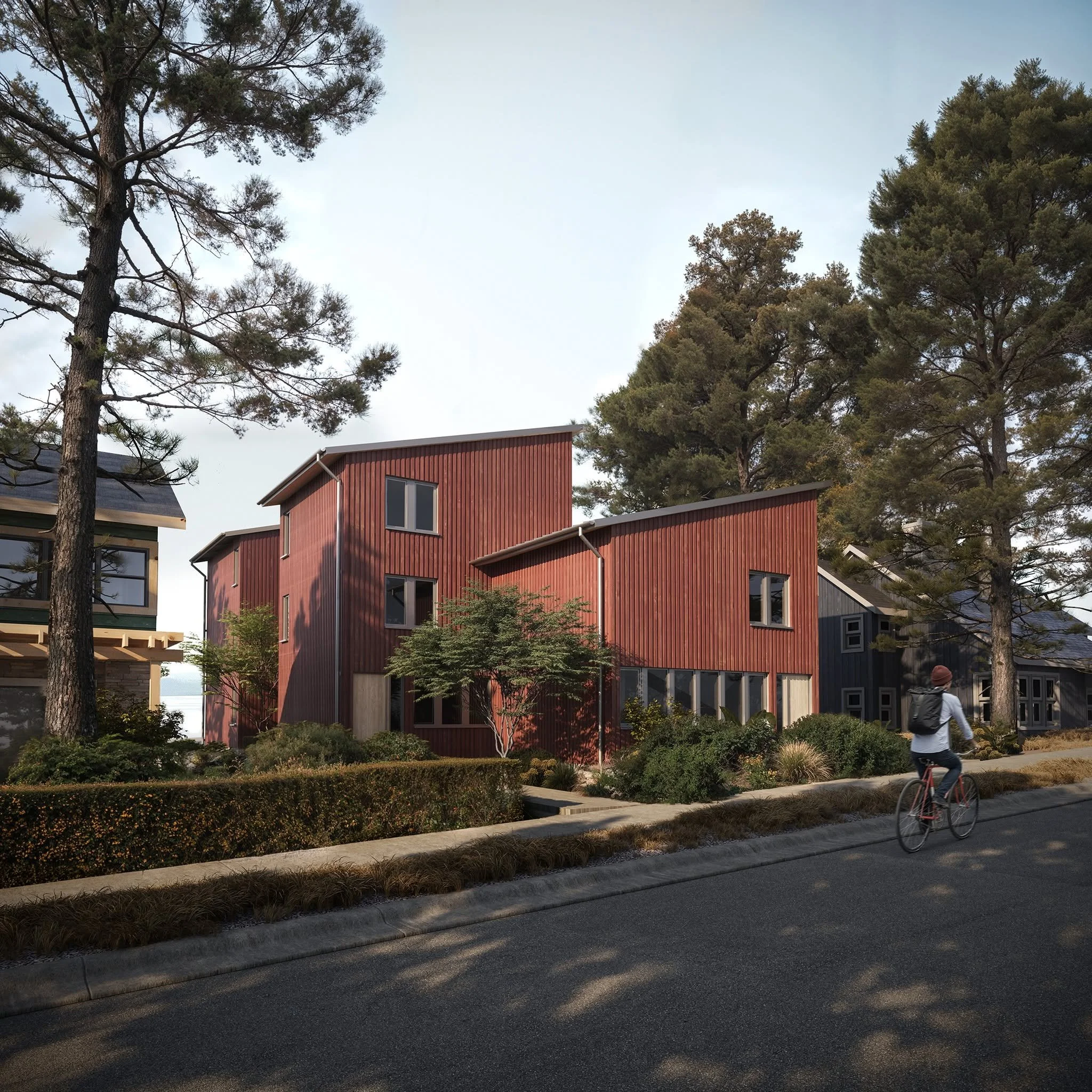
An example of 1 of 10 standardized designs for small-scale housing, previously developed by Leckie Studio for the province of BC.
BC Housing's new Digitally Accelerated Standardized Housing program promises to build more homes, faster. But as housing becomes increasingly standardized, prefabricated and digitally designed, architects have a bigger question to ask: what happens to architecture?
For years, the architectural profession has been told that technology will change the way we work.
Building Information Modelling would transform practice. Parametric design would change how we design. Artificial intelligence would automate repetitive tasks. Prefabrication would revolutionize construction.
Now BC Housing is putting many of these ideas together in one program.
Digitally Accelerated Standardized Housing — DASH — is an ambitious attempt to rethink how housing gets designed and built in British Columbia.
The premise is straightforward: standardize common building elements, use digital tools to streamline design and approvals, incorporate prefabricated components, and coordinate manufacturers and construction teams earlier in the process. BC Housing estimates that the approach could reduce the development timeline from approximately three years to one.
For a province desperate for housing, that sounds like good news.
For architects, however, there is another question hiding underneath it:
If we can standardize housing, how much architecture do we actually need?
The promise of doing more with less
There is a compelling argument for what DASH is trying to accomplish.
Housing projects are full of repetitive work. Unit layouts are redrawn. Details are recreated. Consultants coordinate similar assemblies from project to project. Permit drawings are produced, reviewed and revised. Materials are sourced and resourced. Contractors encounter the same construction challenges again and again.
Why should every project start from zero?
DASH attempts to create a shared digital and construction framework that can remove some of this repetition. Its tools and designs are publicly accessible, and the system is intended to make housing easier and faster for architects, designers, developers and manufacturers to deliver.
There is an obvious efficiency here.
If we already know that certain unit configurations work, that certain structural grids are economical, and that certain wall assemblies can be prefabricated efficiently, perhaps there is little value in reinventing them every time.
But this is where things get uncomfortable.
What happens when the things we call “repetitive work” start to include the things that make architecture architecture?
Could developers just rinse and repeat?
This is probably the question many architects will have when they first hear about DASH.
If a developer can access a library of permit-friendly designs, standardized building components and prefabricated systems, what prevents a successful project from becoming a template?
Imagine a housing project that works well in one municipality.
The next project uses the same unit layouts.
The next uses the same structural system.
The next uses the same façade strategy.
The next is simply a different site wrapped around essentially the same building.
From a development perspective, this could be incredibly attractive. Standardization reduces risk. Repetition improves procurement. Familiar systems become easier to price and construct.
But architecture has historically operated on almost the opposite principle.
Every site is different. Every client is different. Every community is different.
Architecture is, at least in part, the process of responding to those differences.
If the economic incentive is to repeat what worked before, there is a risk that the industry begins optimizing for the building product rather than the place.
And that is where the conversation about DASH becomes much bigger than housing.
Is this the architectural version of robots taking our jobs?
It is tempting to frame this as another version of the familiar “robots are taking our jobs” story.
But that probably isn't quite right.
DASH isn't a robot designing buildings instead of an architect. In fact, AIBC specifically describes the program as supporting rather than replacing architects, and its current procurement opportunities include architectural firms.
The more immediate change is subtler.
The technology may not replace architects. It may replace parts of what architects currently do.
Documentation can become automated.
Standard details can become reusable.
Digital models can become increasingly intelligent.
Building components can be manufactured off-site.
Approvals can become more streamlined.
And eventually, some of the work that currently occupies enormous amounts of an architect's time may simply disappear.
That isn't necessarily a bad thing.
If architects spend less time drawing the same bathroom detail for the hundredth time, perhaps they can spend more time thinking about the things that actually matter.
But there is a catch:
Someone has to decide what those things are.
What happens to creativity when efficiency becomes the priority?
The concern isn't necessarily that every DASH building will look identical.
In fact, standardization could happen largely behind the scenes.
A structural grid can be standardized while the building's massing changes.
A bathroom module can be standardized while the unit responds to different demographics.
A wall assembly can be standardized while the façade responds to climate and context.
A digital model can be standardized while the building's relationship to the street remains site-specific.
This is arguably the best-case scenario for DASH: standardize the parts that don't need to be unique, so architects have more time to work on the parts that do.
BC Housing is already exploring this broader approach. Its DASH Common Space System, for example, provides guidance for creating shared spaces that support social connection and livability rather than simply prescribing a generic building.
But whether that philosophy survives contact with the economics of development remains to be seen.
Because once a standardized system exists, there will always be pressure to standardize a little bit more.
The real risk isn't standardization. It's commodification.
Perhaps the most useful distinction is between standardizing construction and standardizing architecture.
The first could be transformative.
The second should make us nervous.
There is nothing inherently un-architectural about prefabrication. Some of the most thoughtful architecture in the world has relied on modular systems, repetitive structures and industrialized construction.
The problem arises when efficiency becomes the primary measure of success.
If the question becomes:
How quickly can we produce another building like the last one?
we have created a very efficient construction industry.
If the question remains:
How can we use what we've learned to make the next building better?
we might have created something much more interesting.
Maybe architects should be designing the system
There is another way of looking at DASH.
Instead of seeing standardization as something that threatens architectural creativity, architects could see it as an opportunity to move upstream.
If buildings are increasingly assembled from standardized components, who designs those components?
Who decides how adaptable a unit should be?
Who determines which dimensions can change and which should remain fixed?
Who considers accessibility, daylight, privacy, social interaction and long-term livability?
Who determines how a standardized building responds to a particular site?
Who decides when a standard solution is no longer appropriate?
Those are design questions.
And they require architectural thinking.
The architect of the future may therefore spend less time designing every individual building from scratch and more time designing the systems from which buildings are made.
That is a very different role — but it could potentially be a more influential one.
The opportunity for a new kind of architectural practice
This is perhaps where DASH gets particularly interesting for the profession.
AIBC's current DASH procurement stream specifically calls for firms with experience in prefabricated or panelized construction and BIM.
That suggests that architects aren't being pushed out of the process.
They are being asked to participate differently.
The architect may increasingly become:
a designer of adaptable systems;
a coordinator between digital design and manufacturing;
a specialist in design for assembly and fabrication;
a steward of architectural quality;
an advocate for site-specific and community-specific responses;
and, importantly, the professional responsible for knowing when a standardized solution shouldn't be used.
That last role may become more important, not less.
But we should still be asking difficult questions
DASH is being developed in response to a very real problem. British Columbia needs more housing, and the traditional development process is expensive, slow and fragmented.
BC Housing is already moving the program from research into real projects, including approximately 40 affordable rental homes in Prince George and 50 spaces of women's transitional housing in Abbotsford.
There is also significant government investment behind the approach, including a federal-provincial partnership that could direct funding toward more than 400 additional homes using DASH and modern methods of construction.
So this isn't a theoretical conversation anymore.
The profession is going to get to see what happens when standardization meets the messy realities of actual sites, communities, budgets and construction.
And architects should be paying attention.
Not because DASH is necessarily a threat.
But because it could change what architecture is worth.
What if the future isn't fewer architects — but different architects?
The biggest mistake would be to assume that the choice is between traditional architecture and standardized housing.
It doesn't have to be.
We could imagine a future where the repetitive parts of building design are increasingly automated, manufactured and standardized — while architects become more focused on the human, social and contextual aspects of architecture.
Or we could imagine a less optimistic future, where standardized systems become shortcuts for developers looking to minimize design fees and maximize repetition.
Both futures are possible.
The difference may come down to whether architects participate in designing these systems — or simply receive them after someone else has already made the important decisions.
DASH is asking BC how we can build more housing.
Architects should ask a parallel question:
How do we make sure that building more housing doesn't mean designing less?
Because if technology can take away the repetitive parts of architecture, perhaps the opportunity isn't to fight it.
Perhaps the opportunity is to figure out what remains uniquely valuable about having an architect in the room — and make sure that is the part of the profession we protect, develop and champion.