
Vancouver's Villages Plan: A Decade in the Making
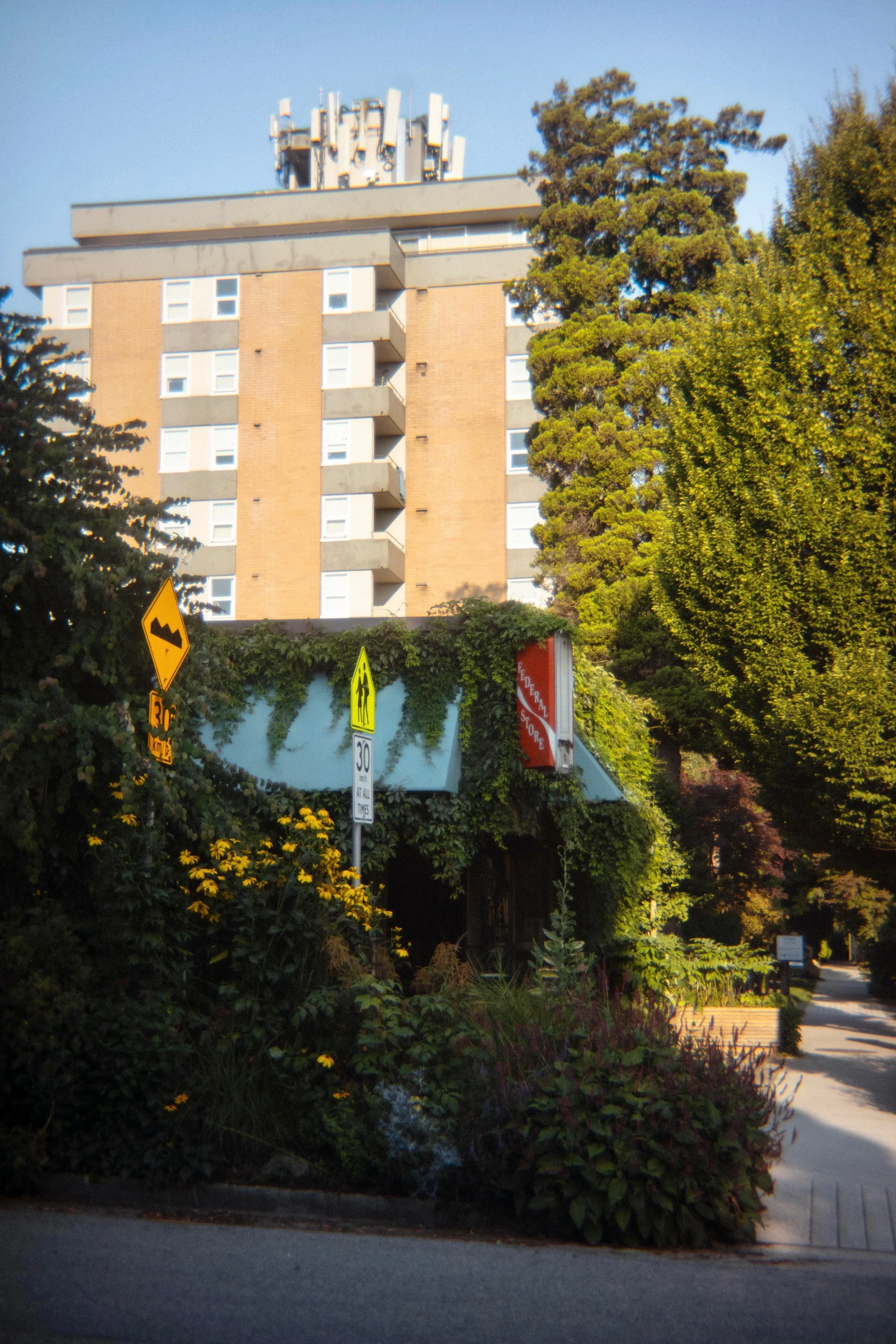
The Federal Store Luncheonette & Grover along the 10th avenue bike lane, photo by Breana Chabot.
Few planning initiatives in recent years have generated as much discussion as Vancouver's Villages Plan. While public attention focused on the lengthy public hearing and differing political viewpoints, the proposal itself was the product of several years of planning work, extensive public engagement, and a broader shift in provincial housing policy.
For architects, the Villages Plan offers valuable insight into how long-range planning, municipal politics, and housing policy intersect—and how planning frameworks evolve over time.
From Vancouver Plan to Villages
The origins of the Villages Plan can be traced back to the Vancouver Plan, adopted by Council in 2022 after a multi-year planning process. Rather than concentrating future growth solely along major corridors and rapid transit stations, the Vancouver Plan introduced the concept of "Villages"—small commercial nodes distributed throughout established neighbourhoods that could gradually evolve into complete communities with additional housing, local services, employment opportunities, and public spaces. The objective was to accommodate population growth while allowing residents to meet more daily needs within walking distance of home.
Unlike neighbourhood centres planned through individual community plans, the Villages concept proposed a consistent city-wide framework. It reflected a broader planning philosophy: incremental intensification around existing local shopping streets rather than relying exclusively on large redevelopment areas.
Building the Framework
Following adoption of the Vancouver Plan, City staff initiated the Villages Planning Program.
Between 2024 and 2026, the City undertook multiple phases of technical analysis and public engagement to identify potential Village locations, examine land-use options, and develop urban design principles. The work considered transportation, commercial viability, infrastructure capacity, public amenities, and neighbourhood context while seeking to balance additional housing with protection of existing residential areas.
The resulting proposal identified seventeen Village areas across Vancouver where modest mixed-use intensification could occur over time.
Rather than representing immediate redevelopment, the plan was intended as a long-term land use framework to guide future rezonings and city-initiated zoning changes.
Timeline of Key Milestones
2022 – Vancouver Plan adopted
Council adopts the Vancouver Plan, introducing the concept of distributed neighbourhood Villages as part of a city-wide growth strategy.
2024–2025 – Public engagement and technical studies
The City undertakes multiple rounds of engagement, urban design analysis, and policy development to refine Village locations and development principles.
January 2026 – Rupert and Renfrew implementation
Council approves zoning updates implementing the Village concept within portions of the Rupert and Renfrew Station Area Plan, providing an early example of how the planning approach could be applied in practice.
March 2026 – Vancouver Official Development Plan adopted
Council adopts Vancouver's first city-wide Official Development Plan (ODP), incorporating the broader land-use framework required under provincial legislation. The ODP establishes the policy foundation upon which future planning initiatives, including Villages, would build.
June 2026 – Referral to Public Hearing
City staff present the Villages Plan, associated city-initiated rezonings, and amendments to the Vancouver Official Development Plan for Council consideration and referral to Public Hearing.
July 2026 – Public Hearing
The proposal attracts one of the largest public participation processes in recent years, with hundreds of registered speakers and extensive written submissions reflecting a wide range of perspectives on neighbourhood growth, commercial uses, housing supply, transportation, and local character.
July 2026 – Council Decision
Following several days of public hearing and Council deliberation, the proposed Villages Plan did not receive Council approval in its presented form. Council members cited differing views regarding public feedback, implementation, and the appropriate approach to neighbourhood planning.
Why the Proposal Generated Debate
The discussion surrounding the Villages Plan reflected differing perspectives on how Vancouver should accommodate future growth.
Supporters viewed the proposal as an opportunity to diversify housing options, strengthen local commercial areas, improve walkability, and distribute growth more evenly throughout the city.
Others expressed concerns regarding neighbourhood character, infrastructure capacity, commercial viability, traffic, consultation, and the pace of change.
The debate ultimately extended beyond questions of density to broader issues of governance, implementation, and community participation.
What the Plan Proposed
Although often characterized simply as a density initiative, the Villages Plan was considerably broader.
Its objectives included:
Expanding housing choice within established neighbourhoods.
Supporting local retail and small businesses.
Creating more complete, walkable communities.
Improving access to parks, public spaces, and daily services.
Coordinating future land-use decisions through a city-wide framework.
Importantly, the proposal envisioned gradual evolution over several decades rather than immediate redevelopment.
Lessons for Architectural Practice
Whether or not the specific proposal proceeds in the future, several broader lessons are likely to endure.
Planning is becoming increasingly city-wide. Individual rezonings are now being evaluated within larger strategic frameworks such as the Vancouver ODP, area plans, and provincial housing legislation.
Housing policy continues to evolve rapidly. Provincial initiatives promoting housing supply are influencing municipal planning approaches, requiring practitioners to remain attentive to both local and provincial policy directions.
Community engagement remains fundamental. The Villages process demonstrated that successful planning depends not only on technical analysis but also on meaningful public dialogue and transparent implementation strategies.
Architects play an increasingly strategic role. Today's architectural practice extends beyond building design. Architects are expected to understand land-use policy, infrastructure planning, housing economics, urban design, and community consultation as integrated components of project delivery.
Looking Ahead
Although the Villages Plan was not adopted in its proposed form, the underlying issues it sought to address remain.
Vancouver continues to face sustained population growth, housing affordability challenges, and increasing pressure to deliver more complete, walkable neighbourhoods. The concepts explored through the Villages Planning Program are therefore likely to continue influencing future planning discussions, whether through revised policy, neighbourhood-specific plans, or future city-wide initiatives.
For architects, the Villages Plan serves as a reminder that shaping cities is rarely a single decision. It is an iterative process that combines long-term vision, technical planning, political decision-making, and community dialogue—each playing an essential role in determining how neighbourhoods evolve over time.